


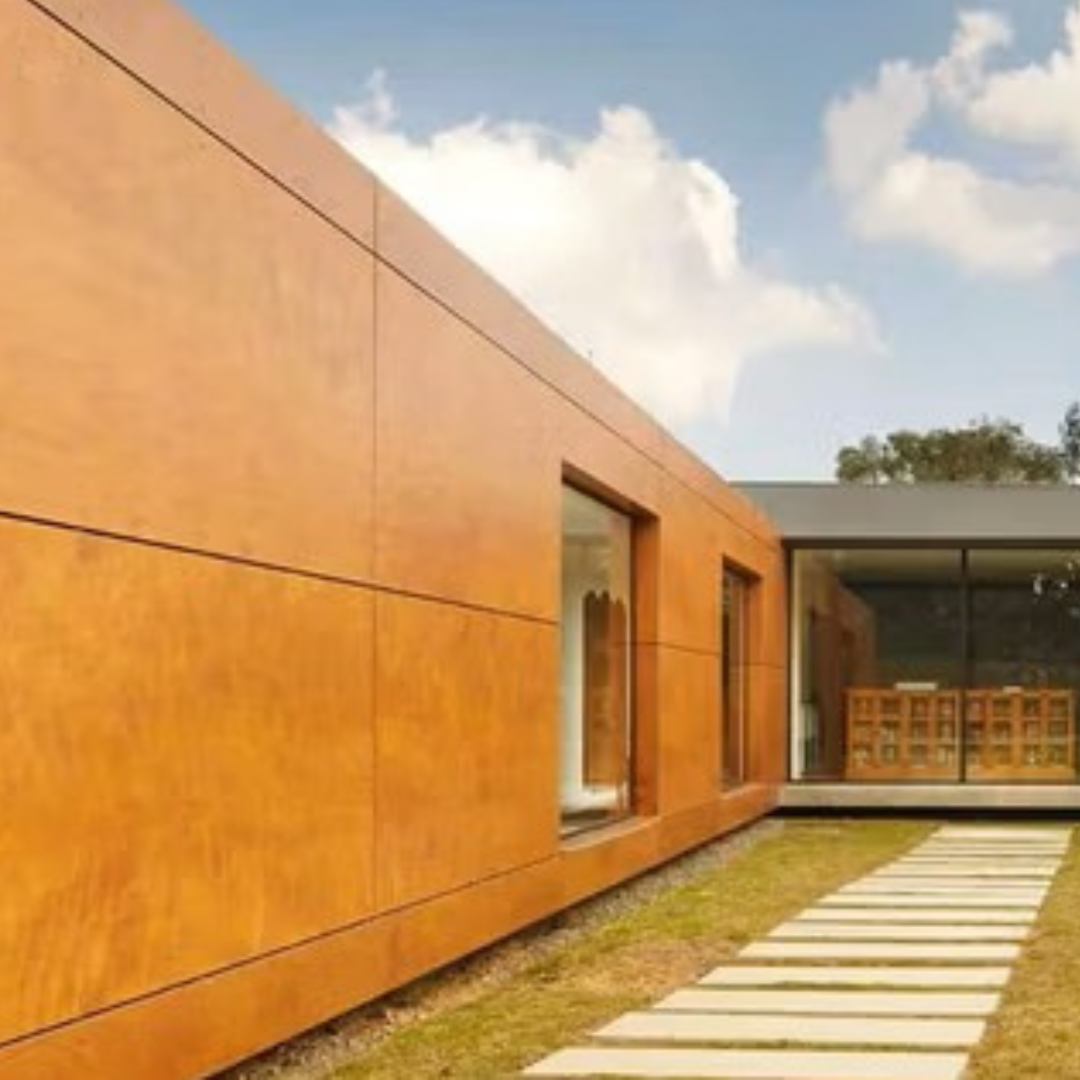
The Science Behind PMMA Surface Technology Used in High-Performance Exterior HPL – Samrat HPL
Exterior façade materials operate in one of the most demanding environments in the construction industry. Every day façade panels are exposed to:
- Ultraviolet radiation (UV)
- Temperature fluctuations
- Rain and humidity
- Wind-borne dust and sand
- Atmospheric pollution
If the surface layer of the panel is not properly protected, the façade can gradually lose colour, gloss, texture, and durability.
To address this challenge, advanced Exterior HPL panels use PMMA (Polymethyl Methacrylate) acrylic protective layers.
At Samrat HPL, Exterior HPL panels incorporate a 50-micron PMMA protective film sourced from Evonik / Röhm (Plexiglas® technology). This acrylic layer significantly improves UV stability, surface hardness, colour durability, and long-term weathering performance.
Today, more than 9 million square metres of Samrat HPL Exterior panels have been installed globally (as of 2025), demonstrating strong performance across diverse climates including Europe and the Middle East.
Understanding PMMA (Polymethyl Methacrylate)
PMMA is a high-performance thermoplastic polymer produced through polymerization of methyl methacrylate (MMA) monomers.
Chemical structure (simplified repeating unit):
(C₅O₂H₈)n
PMMA belongs to the acrylic polymer family and is widely used in industries that require excellent optical clarity, weather resistance, and UV stability.
Typical PMMA properties:
| Property | Typical Value |
| Density | ~1180 kg/m³ |
| Light transmission | ~92% |
| Glass transition temperature | ~105°C |
| UV resistance | Excellent |
| Weather durability | Very high |
Because of these characteristics, PMMA is used in applications such as:
- Aircraft windows
- Automotive lighting systems
- Outdoor signage
- Architectural glazing
- High-performance exterior laminates
Structure of Exterior HPL with PMMA Protection
In high-performance exterior laminates, the PMMA film forms the outermost protective layer.
Typical layer structure:
- PMMA acrylic protective film (~50 µm)
- Decorative paper layer
- Melamine resin surface layer
- Multiple kraft papers impregnated with phenolic resin
- High-pressure compact laminate core
This layered structure ensures that the decorative surface and pigments remain protected from environmental degradation.
1. UV Resistance – The Primary Advantage of PMMA
Ultraviolet radiation is one of the most damaging environmental factors for façade materials.
UV exposure can cause:
- pigment degradation
- fading of colours
- surface chalking
- resin breakdown
PMMA offers excellent resistance to UV radiation because its polymer backbone contains stable carbon-carbon bonds, which resist photochemical degradation.
The PMMA layer therefore acts as a UV barrier, protecting the decorative layer underneath.
At Samrat HPL, UV stability is validated using 3000-hour Xenon Arc weathering tests, which simulate long-term sunlight exposure.
➡ Related blog
UV Resistance in Exterior HPL: Why Colors Don’t Fade
2. Surface Hardness and Scratch Resistance
Another important benefit of PMMA layers is improved surface hardness.
PMMA typically has a Rockwell hardness of approximately M90.
What is Rockwell Hardness?
Rockwell hardness is a standardized method used to measure the resistance of a material to indentation or penetration.
The test works by:
- Pressing a diamond or steel indenter into the surface
- Measuring the depth of penetration under a specific load
- Converting that depth into a hardness value
Higher Rockwell hardness values indicate greater resistance to surface damage.
What Does M90 Mean?
The Rockwell scale has several variants depending on the material being tested. For plastics, the Rockwell M scale is commonly used.
On this scale:
- M90 indicates a relatively hard polymer surface
- It means the material resists indentation and surface deformation under load
In practical façade terms, this hardness helps the surface resist:
- scratches from dust particles
- abrasion caused by wind-blown sand
- wear from cleaning operations
This is especially important for buildings located in urban and desert environments.
3. Long-Term Colour Stability
One of the key visual requirements of façade materials is long-term colour stability.
Samrat HPL ensures colour durability through a combination of:
- EU sourced decorative papers
- pigment testing in European laboratories
- PMMA UV protection layer
The PMMA film shields the pigments from direct UV exposure, ensuring that the façade maintains consistent colour appearance over time.
4. Resistance to Weathering
PMMA is well known for its excellent weathering resistance.
Unlike many other polymers, PMMA:
- resists yellowing
- maintains transparency
- retains mechanical strength over long outdoor exposure
Because of this stability, PMMA is widely used in architectural and outdoor engineering applications.
When combined with compact laminate technology, the result is a façade panel capable of withstanding decades of environmental exposure.
5. Thermal Stability of PMMA Layers
Exterior façade panels can reach surface temperatures of 60–80°C under strong sunlight, particularly on darker colours.
PMMA remains stable up to its glass transition temperature of approximately 105°C, meaning it maintains its structural integrity under these conditions.
This ensures that the protective layer continues to shield the decorative surface even under high temperature exposure.
Integration with Samrat HPL Structural Engineering
While the PMMA film protects the surface, the mechanical strength of the panel comes from the compact laminate core.
Samrat HPL panels combine several technical advantages:
- 100% phenolic resin systems
- higher resin content (~28.5%)
- high density structure (~1350–1450 kg/m³)
- deep resin impregnation of kraft papers
- dedicated exterior HPL manufacturing (≈99% production)
This engineering combination provides both surface protection and structural durability.
Why Samrat HPL Uses Evonik / Röhm PMMA Films
Not all acrylic films offer the same performance.
Evonik / Röhm (Plexiglas® technology) is recognized globally for:
- consistent polymer quality
- excellent UV stability
- long-term outdoor durability
Using these high-quality PMMA films ensures that Samrat HPL panels maintain stable surface performance throughout their service life.
Real-World Validation – Samrat HPL
Surface technologies only prove their value when tested in real installations.
With over 9 million m² of Exterior HPL installed globally by 2025, Samrat HPL panels are currently performing in:
- high-UV Middle Eastern climates
- European seasonal environments
- coastal humidity conditions
- urban pollution zones
These installations confirm the effectiveness of PMMA surface protection combined with high-performance compact laminate engineering.
Why Architects Choose Samrat HPL
Samrat HPL panels provide superior façade performance through a combination of:
- 50-micron PMMA film (Evonik / Röhm)
- 3000-hour Xenon UV weathering validation
- 100% phenolic resin system
- higher resin content (~28.5%)
- high density compact structure (~1350–1450 kg/m³)
These features ensure long-term surface durability, colour stability, and structural reliability.
Conclusion
PMMA acrylic layers play a crucial role in the long-term performance of Exterior HPL façade panels.
Technically, PMMA provides:
- excellent UV resistance
- protection of decorative pigments
- improved surface hardness (Rockwell M90)
- strong weathering stability
- long-term colour durability
When combined with the advanced laminate engineering used in Samrat HPL panels, the result is a façade material designed to perform reliably for decades.
With more than 9 million square metres of global installations, Samrat HPL Exterior Cladding continues to deliver durable, weather-resistant façade solutions for modern architecture.