


Blog / September 14, 2026
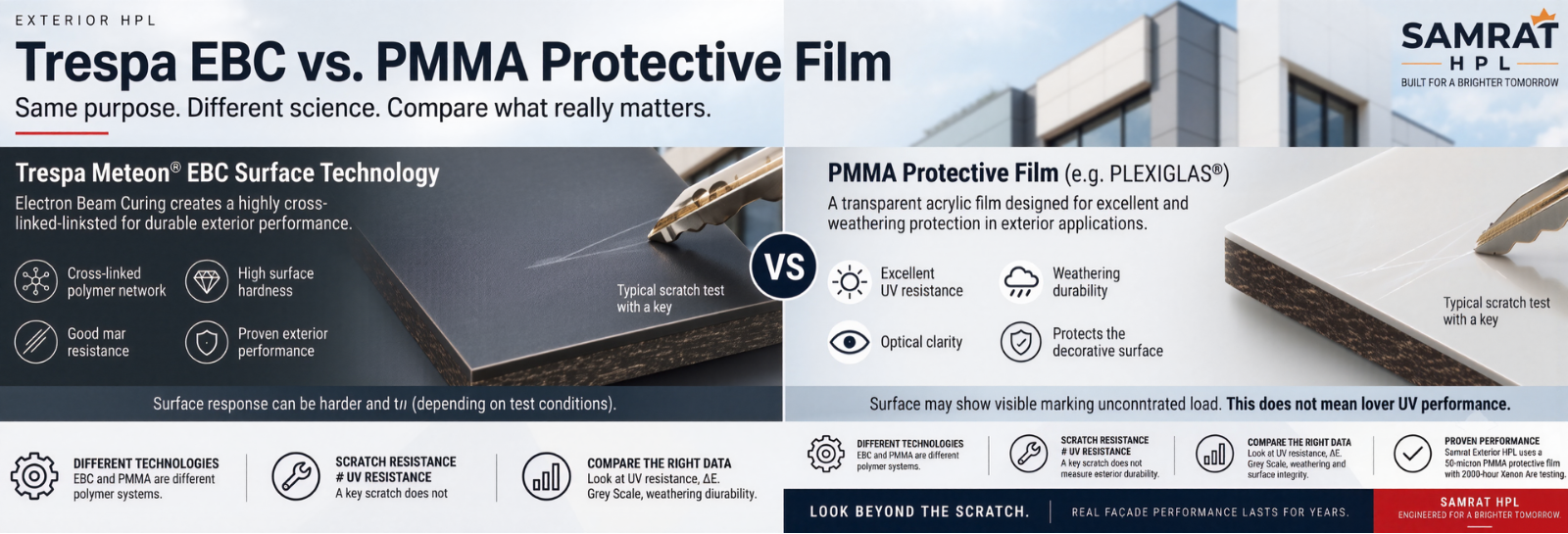
Trespa EBC vs. PMMA Protective Film in Exterior HPL: A Materials-Science Comparison When architects, façade consultants or installers compare Trespa Meteon® Exterior HPL with PMMA-protected Exterior HPL, one difference can sometimes be noticed immediately: the surfaces may respond differently to scratching. For example, scratching both panels with a key may…
Blog / September 14, 2026
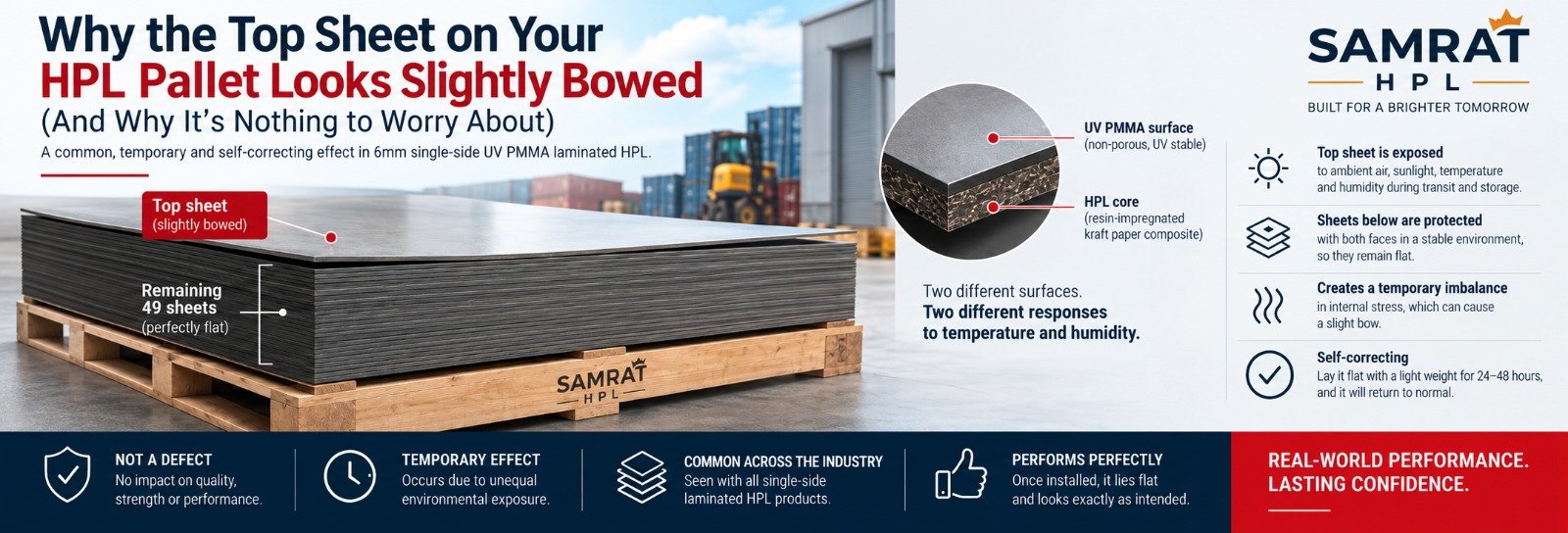
Why the Top Sheet on Your HPL Pallet Looks Slightly Bowed — And Why It’s Nothing to Worry About Understanding Temporary Bowing in 6 mm Single-Side UV PMMA Exterior HPL Panels You unwrap a pallet of 6 mm Exterior HPL panels after a long shipment. Almost every sheet in the…
Blog / September 12, 2026
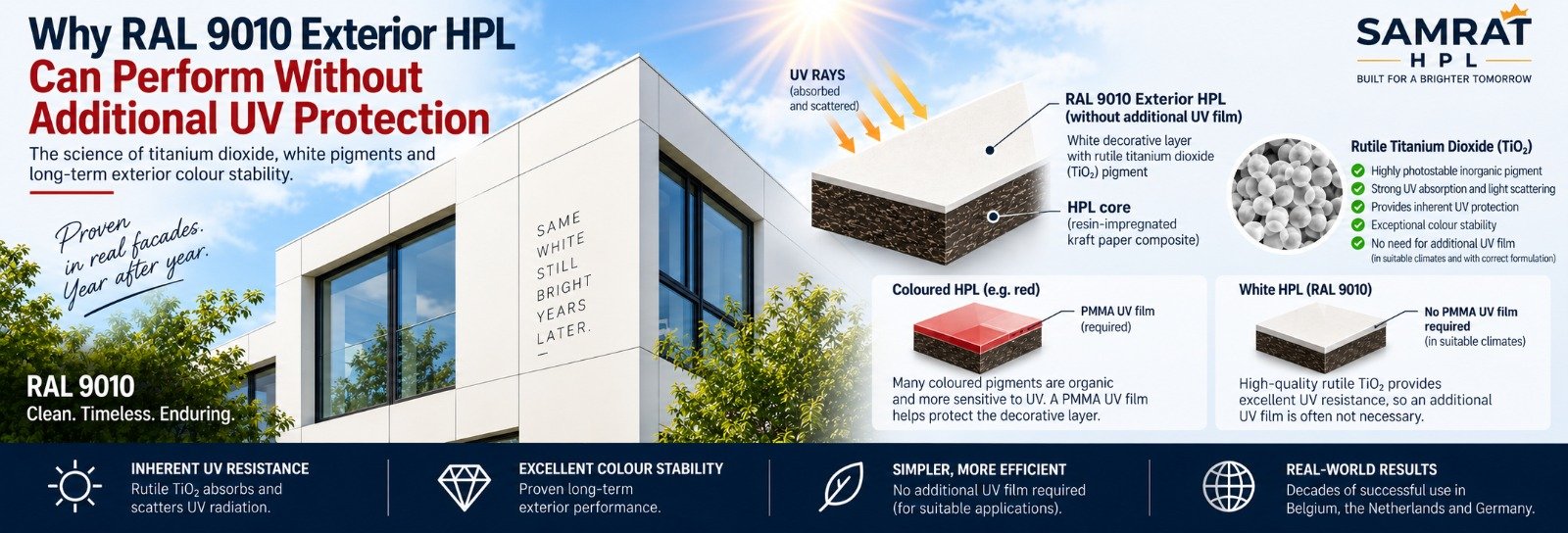
Why RAL 9010 Exterior HPL Can Perform Without Additional UV Protection? Why White HPL Can Maintain Exceptional Colour Stability—and Why Some European Exterior HPL Applications May Not Require the Same UV Surface Protection as Other Colours Walk past an older building clad in white Exterior HPL in the Netherlands, Belgium or Germany…
Blog / September 5, 2026
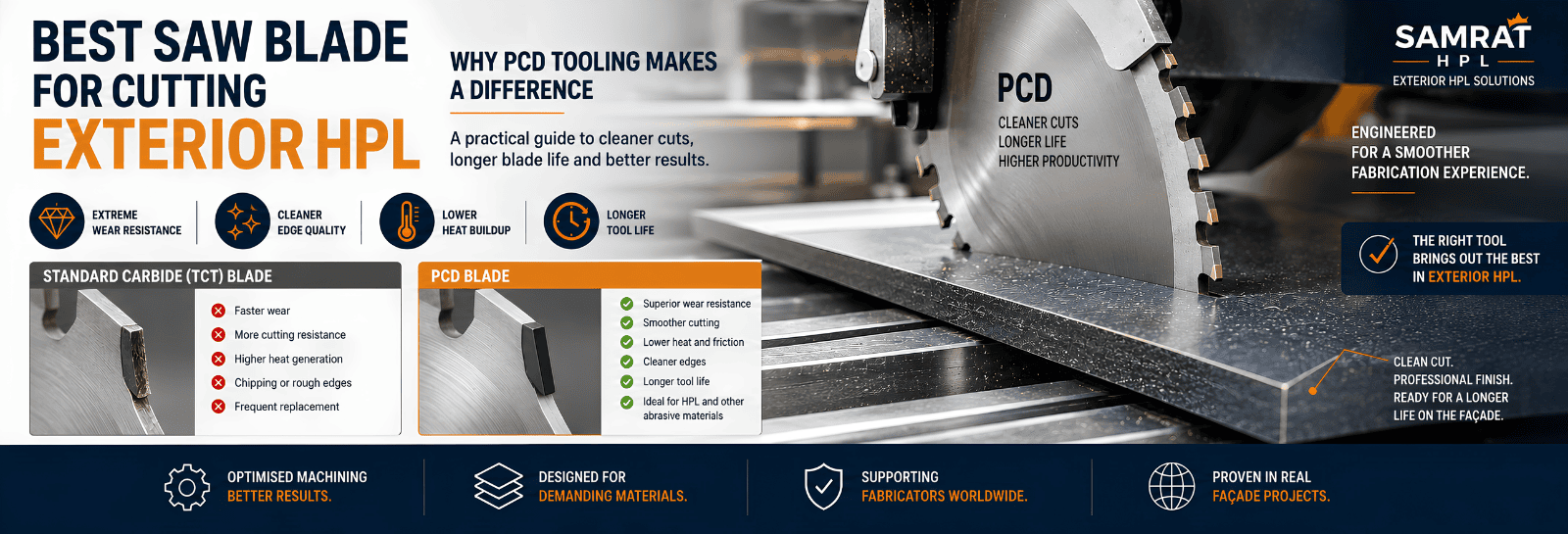
Best Saw Blade for Cutting Exterior HPL: Why PCD Tooling Makes a Difference A Practical Guide to Cutting Compact HPL, Reducing Blade Wear, Chipping and Cutting Resistance There is a familiar conversation in the Exterior HPL industry. A fabricator or installer starts cutting a new batch of 6 mm or…
Blog / August 20, 2026
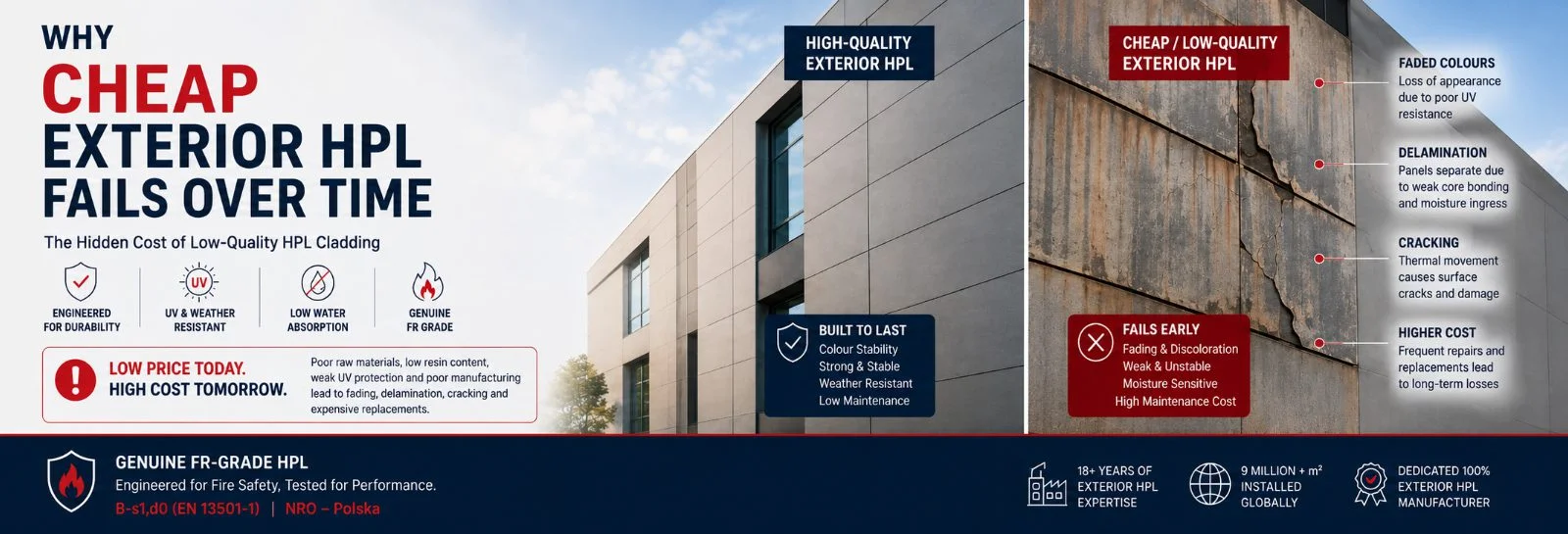
Why Cheap Exterior HPL Fails Over Time: The Hidden Cost of Low-Quality HPL Cladding Why Resin Quality, Density, UV Protection, Manufacturing Discipline and Genuine FR-Grade Construction Matter More Than the Initial Price When two Exterior HPL panels are placed next to each other in a showroom, they can look remarkably similar. Same…
Blog / July 28, 2026
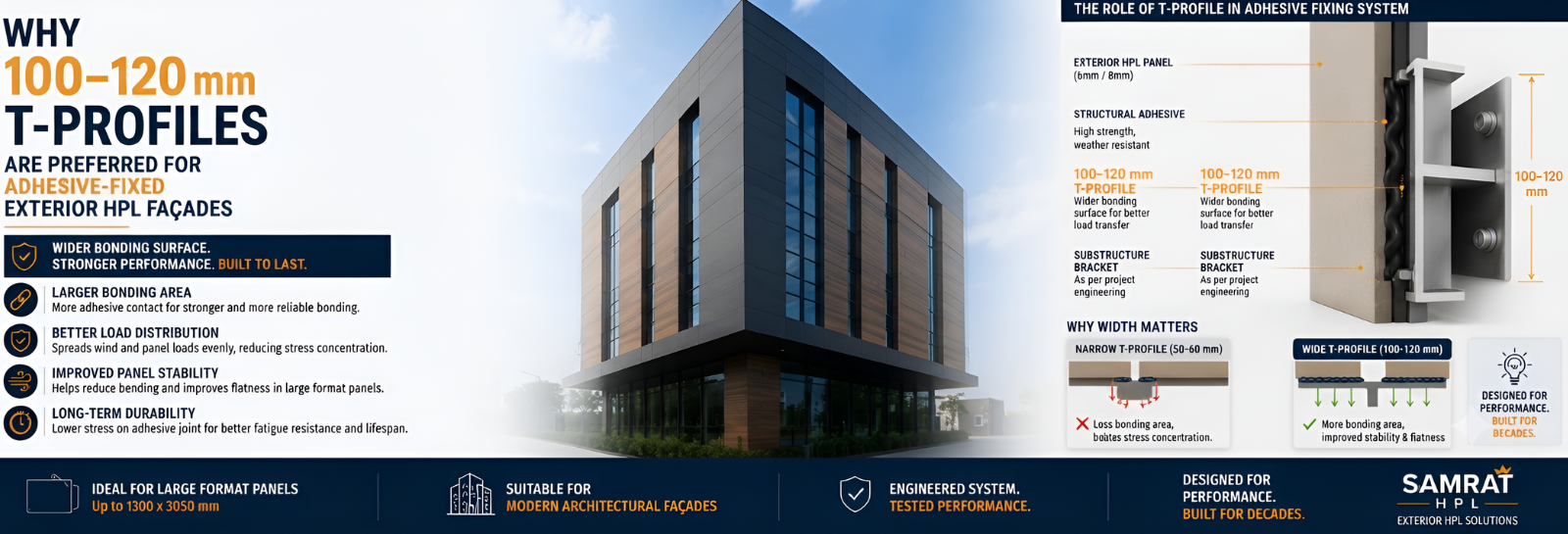
Why 100–120 mm Aluminium T-Profiles Are Preferred for Adhesive-Fixed Exterior HPL Façades The Engineering Behind Stronger Bonding, Better Panel Stability and Long-Term Façade Performance Modern architecture increasingly favours clean, uninterrupted façades without visible rivets or screws. As a result, adhesive-fixed Exterior HPL façade systems have become one of the fastest-growing…