


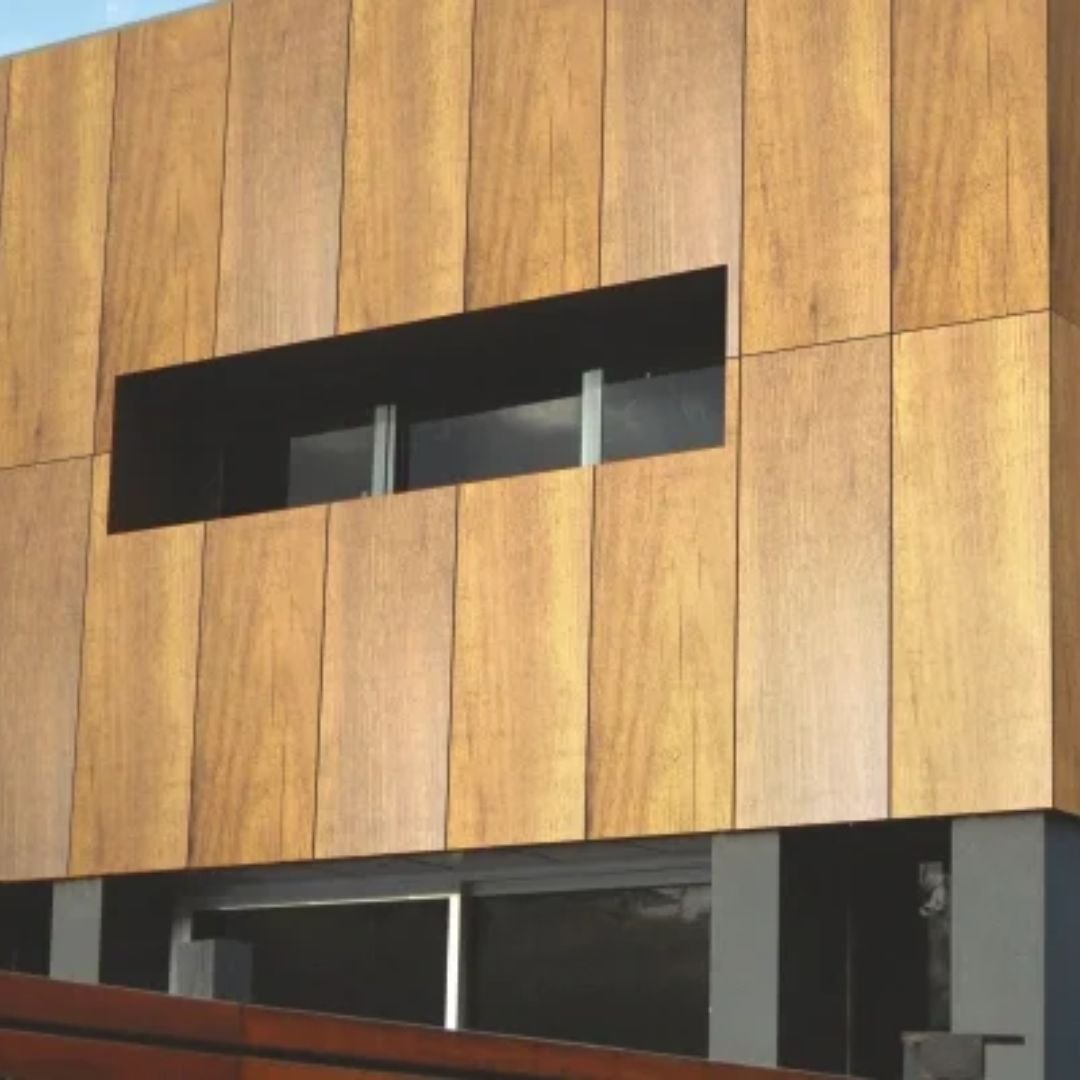
Designed for Climate Extremes – The Samrat HPL Engineering Philosophy
One of the biggest challenges for any façade material is climate stress. Buildings across the world face extreme temperature variations—from freezing European winters to intense Middle Eastern heat—often within the same project lifecycle.
A façade material that cannot handle these extremes will warp, fade, crack, or fail structurally.
At Samrat HPL, Exterior Compact HPL Cladding is engineered specifically to perform reliably in both extreme heat and extreme cold, making it suitable for global applications.
This blog explains how Exterior HPL behaves under temperature extremes—and why Samrat HPL remains stable where many materials fail.
Why Temperature Resistance Matters in Exterior Facades
Exterior cladding panels are continuously exposed to:
- High daytime temperatures
- Sharp night-time cooling
- Seasonal heat–cold cycles
- Thermal shock
Repeated expansion and contraction can lead to:
- Warping
- Surface cracking
- Loss of fixings
- Long-term deformation
If you are new to Exterior HPL, start with:
“What Is Exterior HPL Cladding? A Complete Beginner’s Guide”
1. High-Pressure Compact Structure Ensures Thermal Stability
Exterior HPL is manufactured by pressing multiple resin-impregnated kraft paper layers under high pressure and high temperature.
This creates:
- A dense, homogeneous structure
- Uniform internal stress distribution
- Predictable thermal behavior
At Samrat HPL, strict control of press cycles and post-press conditioning ensures that panels expand and contract evenly, not unevenly.
To understand the process behind this, read:
“How Exterior HPL Cladding Is Manufactured: Step-by-Step Process”
2. Performance in Extreme Heat (Hot & Desert Climates)
In regions such as the Middle East, facade surfaces can reach very high temperatures due to intense solar radiation.
Samrat HPL Exterior Cladding performs reliably because:
- Phenolic resin core remains structurally stable at high temperatures
- EU decorative papers use high lightfastness pigments
- 50-micron Plexiglass (PMMA) UV film protects surface layers from heat-induced degradation
Key Benefits in Hot Climates:
- Reduced surface degradation
- Excellent color retention
- No surface chalking
- Long-term aesthetic stability
This makes Samrat HPL ideal for Gulf countries, North Africa, and high-UV zones.
3. Performance in Extreme Cold (Freezing Climates)
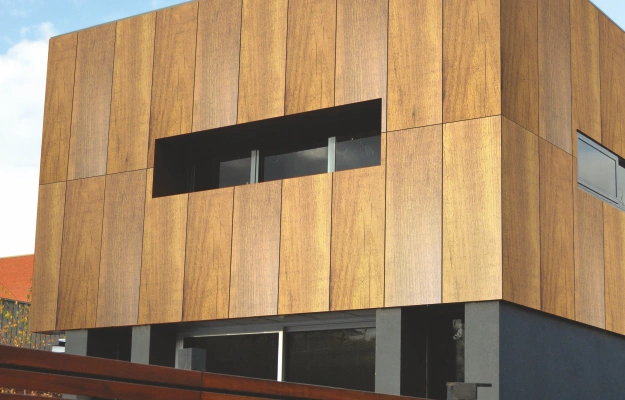
In cold regions, façade materials face:
- Sub-zero temperatures
- Freeze–thaw cycles
- Moisture expansion risks
Samrat HPL Exterior panels:
- Have very low water absorption
- Do not trap moisture internally
- Do not crack due to freeze–thaw action
Because moisture cannot penetrate the compact structure, ice formation inside the panel is prevented, ensuring structural integrity even in harsh winters.
Related reading:
“What Makes Exterior HPL Weather-Resistant?”
4. Controlled Thermal Expansion & Contraction
All materials expand and contract—but control is what matters.
Samrat HPL panels are engineered to:
- Expand uniformly across the panel
- Maintain flatness across temperature cycles
- Work seamlessly with ventilated façade systems
When installed with:
- Correct expansion gaps
- Proper fixing systems
Exterior HPL remains dimensionally stable over decades.
5. Role of Thickness in Temperature Performance
Thickness plays a key role in thermal behavior.
At Samrat HPL:
- Thinner panels (6–8 mm) are engineered for residential and mid-rise applications
- Thicker panels (10–12 mm and above) offer higher resistance for large-format panels and extreme climates
For detailed guidance, see:
“Thickness Options in Exterior HPL Cladding and Their Applications”
6. Surface Protection Against Heat-Induced Aging
Many façade materials fail not structurally—but visually.
Samrat HPL prevents heat-induced aging through:
- EU decorative papers with proven outdoor performance
- PMMA UV protection film acting as a thermal & UV shield
- Stable resin systems that resist surface breakdown
This ensures that façades age gracefully rather than deteriorate prematurely.
7. Tested & Proven for Global Conditions
Exterior HPL used by Samrat HPL is:
- Designed for multi-climate exposure
- Suitable for both hot and cold regions
- Trusted in international projects
This global performance consistency is why architects specify Samrat HPL for projects across multiple climate zones.
Why Samrat HPL Is a Safe Choice for Climate Extremes
Architects and façade consultants choose Samrat HPL Exterior Cladding because it offers:
- Predictable thermal behavior
- Resistance to heat and cold stress
- Long-term flatness and performance
- Reduced maintenance across climates
Temperature resistance at Samrat HPL is engineered through material science—not assumptions.
Conclusion
Extreme temperatures are unavoidable—but façade failure is not.
Through:
- High-pressure compact manufacturing
- Advanced surface protection
- EU decorative paper selection
- PMMA UV shielding
- Controlled thickness engineering
Samrat HPL delivers Exterior HPL Cladding that performs reliably in extreme heat and extreme cold—year after year.
What’s Next?
In the next Phase 1 blog, we will cover:
“Exterior HPL Cladding for Residential vs Commercial Buildings” 📌 This blog is part of the Samrat HPL Exterior HPL Knowledge Series—created to educate, guide, and build long-term trust globally.