


Understanding FIGRA & THR – The Samrat HPL Fire-Safe Facade Approach
Fire safety in façades is no longer about claims or assumptions—it is about how a material is engineered and how it behaves when tested.
In this Phase 2 blog, we go deeper into how Fire-Retardant Exterior HPL is actually manufactured, and we clearly explain two critical fire-performance parameters widely referenced in Europe and global façade design:
● FIGRA (Fire Growth Rate Index)
● THR (Total Heat Release)
At Samrat HPL, fire-retardant Exterior HPL is developed as a performance-engineered material, not as a cosmetic variant.
With a proven milestone of over 9 million square metres of Exterior HPL installed globally till 2025, Samrat HPL’s fire-rated products are already performing on real façades—across residential, commercial, and public buildings in Europe, the Middle East, and beyond.
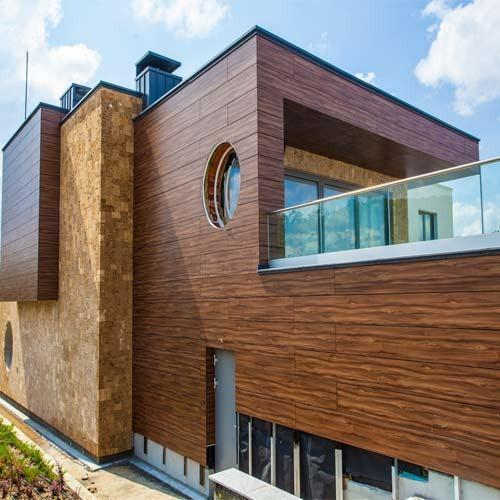
What Makes Exterior HPL Fire-Retardant?
Fire-retardant Exterior HPL is not a surface coating or an after-treatment.
It is achieved through controlled material engineering at the core level.
Fire performance depends on:
Core composition
Resin formulation
Density and compactness
Panel thickness
Overall façade system design
➡️ If you are new to the base material, start here:
“What Is Exterior HPL Cladding? A Complete Beginner’s Guide”
Step-by-Step: How Fire-Retardant Exterior HPL Is Made
1️⃣ Modified Core Formulation (Key Difference)
In fire-retardant Exterior HPL, the core kraft papers are impregnated with specially formulated fire-retardant phenolic resins.
These resins are designed to:
Reduce heat release during combustion
Promote controlled charring
Limit flame spread
Slow down fire growth
This is the most critical step in converting standard Exterior HPL into Fire-Retardant Exterior HPL.
2️⃣ Increased Density Through High-Pressure Manufacturing
Fire-retardant HPL is pressed under:
Very high pressure
High temperature
Tightly controlled press cycles
This creates a dense, compact structure that:
Restricts oxygen penetration
Slows flame propagation
Improves overall fire behaviour
➡️ To understand the manufacturing foundation, read:
“How Exterior HPL Cladding Is Manufactured: Step-by-Step Process”
3️⃣ Controlled Charring Instead of Melting or Dripping
When exposed to fire:
Fire-retardant Exterior HPL forms a stable char layer
This char layer acts as a thermal barrier
It protects the inner core from rapid combustion
This behaviour is essential for achieving low fire growth and controlled heat release, which directly influences FIGRA and THR values.
4️⃣ Decorative Surface & Protective Layers
At Samrat HPL, fire-retardant Exterior HPL also includes:
Decorative papers sourced from reputed EU printers
A 50-micron Plexiglass (PMMA) UV protection film on the surface
While the PMMA film is primarily for UV stability and long-term colour protection. The fire performance is governed by the engineered core and resin system, not just the surface.
Fire testing always evaluates the complete panel, not individual layers.
Understanding FIGRA – Fire Growth Rate Index
FIGRA measures how quickly a fire develops once ignition occurs.
In simple terms:
Lower FIGRA = slower fire growth
Slower fire growth = more time for evacuation and fire control
FIGRA is a critical parameter in façade fire classification, especially under European fire testing standards.
Fire-retardant Exterior HPL is engineered to:
Limit rapid flame spread
Control the rate at which fire intensity increases
This makes it suitable for fire-conscious façade designs, especially in commercial and public buildings.
Understanding THR – Total Heat Release
THR measures the total amount of heat energy released by a material during a defined fire exposure period.
Why THR matters:
High heat release accelerates fire spread
Lower THR reduces fire severity
Lower THR improves overall façade fire safety
Fire-retardant HPL is designed to:
Release heat in a controlled and limited manner
Avoid sudden energy spikes during combustion
Together, low FIGRA + controlled THR indicate predictable and manageable fire behaviour.
Why FIGRA & THR Matter More Than Marketing Claims
Fire performance is quantified, not described.
Architects and façade consultants focus on:
FIGRA values
THR values
Smoke development
Droplet behaviour
This is why Samrat HPL positions its fire-retardant HPL based on tested performance parameters, not generic “fire-safe” wording.
➡️ Next blog will cover this in detail:
“Understanding Fire Ratings in Exterior HPL (EN 13501 Explained)”
Fire-Retardant Exterior HPL in Real Buildings
Fire-retardant HPL is commonly specified in:
Commercial buildings
Educational institutions
Hospitals & healthcare facilities
Hotels and public buildings
These applications demand controlled fire behaviour, not assumptions.
➡️ Related reading:
“Exterior HPL Cladding for Residential vs Commercial Buildings”
A Proven Global Track Record – Samrat HPL
Fire performance is meaningful only when combined with real-world durability.
With over 9 million m² of Exterior HPL installed globally till 2025, Samrat HPL has demonstrated that its Exterior and Fire-Retardant panels:
Perform reliably over time
Maintain structural and surface integrity
Meet façade expectations across diverse climates
This scale of application builds confidence, trust, and long-term credibility.
Why Architects & Consultants Trust Samrat HPL Fire-Retardant HPL
Samrat HPL is trusted because:
Fire retardancy is engineered at the core level
FIGRA & THR performance is test-driven
Products are designed for façade systems—not isolated panels
Long-term performance is already proven globally
At Samrat HPL, fire safety is engineered, tested, and responsibly delivered.
Conclusion
Fire-retardant HPL is not created by coatings or labels—it is achieved through:
Modified resin chemistry
High-density compact manufacturing
Controlled charring behaviour
Tested FIGRA and THR performance
Backed by 9 million square metres of global installations till 2025, Samrat HPL Fire-Retardant Exterior HPL offers a façade solution that balances fire safety, durability, and architectural freedom.