


Xenon Testing, Pigment Stability & Long-Term Colour Protection – The Samrat HPL Approach
One of the biggest concerns in exterior architecture is simple but critical:
Will the façade maintain its original colour after years of sunlight exposure?
In regions like the Middle East, Southern Europe, and tropical climates, buildings face continuous UV radiation that can quickly damage inferior façade materials. Fading, chalking, and uneven ageing are common problems when UV protection is not engineered properly, making UV Resistance in Exterior HPL a critical performance requirement for long-lasting and visually stable building façades.
At Samrat HPL, UV resistance is regarded as a core performance parameter, not merely a surface feature.
Over 9 million square metres of Samrat HPL Exterior Cladding have been installed globally till 2025, with façades exposed to some of the world’s harshest climates—where long-term colour stability has been consistently demonstrated in real-world conditions.
Why UV Resistance Is So Important in Exterior Cladding
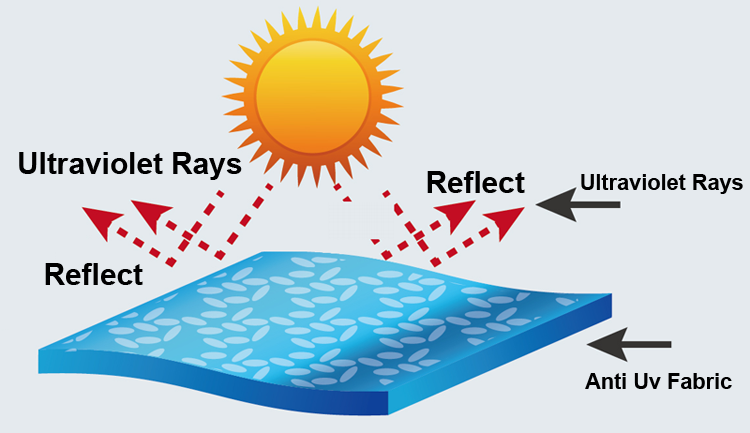
Ultraviolet radiation gradually breaks down:
- Surface resins
- Pigments in decorative layers
- Colour depth and finish consistency
Over time, this can lead to:
- Fading of solid colours
- Washed-out woodgrains
- Uneven appearance across panels
This is why UV stability is a major specification factor for:
- Commercial buildings
- Hotels and public architecture
- Residential façades in high-sunlight regions
For a basic understanding of Exterior HPL structure, see:
“What Is Exterior HPL Cladding? A Complete Beginner’s Guide” (Phase 1 – Topic 1)
The Role of Xenon Testing – Simulating Years of Sunlight
One of the most reliable ways to evaluate UV resistance is through Xenon Arc Weathering Testing.
This test simulates:
- Continuous sunlight exposure
- UV radiation
- Heat
- Moisture cycles
Samrat HPL Xenon Test Benchmark
Samrat HPL Exterior Cladding undergoes 3000-hour Xenon arc testing, which:
- Simulates long-term outdoor exposure
- Evaluates colour stability and surface performance
- Confirms resistance to fading and degradation
The 3000-hour benchmark is passed to demonstrate that Samrat HPL panels are engineered for long-term exterior performance, not just short-term appearance.
This is a critical validation, especially for projects in:
- Middle East climates
- High-UV European regions
- Coastal and desert environments
Careful Selection of Decorative Papers – A Critical Decision
UV Resistance in Exterior HPL begins with the right decorative paper selection.
At Samrat HPL, decorative papers are sourced from reputed EU manufacturers, known for:
- High-quality pigment systems
- Stable colour formulations
- Consistent batch production
But selection does not stop there.
Pigment Testing in EU-Based Laboratories
Before finalizing decorative papers for production, Samrat HPL ensures:
- Pigment stability is evaluated
- Colour fastness is tested
- UV response is verified
These evaluations are conducted through EU-based laboratory pigment testing, ensuring that the colours used in Samrat HPL Exterior panels meet strict performance expectations.
This careful approach ensures:
- Long-term colour consistency
- Reduced fading risk
- Reliable façade aesthetics over time
Material selection fundamentals are explained in:
“Composition of Exterior HPL: Papers, Resins & Protective Layers” (Phase 1 – Topic 6)
50-Micron Plexiglass (PMMA) UV Protection Film
A major performance layer in Samrat HPL Exterior panels is the:
50-micron Plexiglass (PMMA) UV protection film
This layer:
- Acts as a shield against UV radiation
- Protects the decorative pigments underneath
- Enhances long-term colour stability
- Improves surface durability
This multi-layered protection system ensures that colour retention is supported from:
- Decorative paper quality
- Pigment stability
- Surface protection technology
Manufacturing integration is achieved through a seamless and well-coordinated production process.
“How Exterior HPL Cladding Is Manufactured: Step-by-Step Process” (Phase 1 – Topic 2)
UV Resistance in Real Building Environments
UV stability is particularly critical for:
- Large commercial façades
- High-rise buildings
- Coastal projects
- Desert and high-sunlight regions
In such conditions, Samrat HPL panels are designed to:
- Age uniformly
- Maintain colour richness
- Preserve finish texture
➡️ Application relevance is discussed in detail.
“Why Exterior HPL Is Ideal for Modern Building Facades” (Phase 1 – Topic 5)
UV Protection & Long-Term Appearance Value
Colour retention is not just aesthetic—it impacts:
- Property value
- Brand identity (commercial buildings)
- Maintenance requirements
- Lifecycle cost
A façade that maintains its original appearance for years reflects material reliability and engineering quality.
Surface durability also connects to:
“Impact Resistance of Exterior HPL in High-Traffic Areas” (Phase 2 – Topic 14)
A Proven Global Track Record – Samrat HPL
Performance claims are meaningful only when proven at scale.
With over 9 million m² of Exterior HPL installed globally till 2025, Samrat HPL panels have been exposed to diverse climates and demanding environments worldwide.
- Intense Middle Eastern sunlight
- European seasonal variations
- Urban pollution and environmental stress
This large installed base demonstrates trust, durability, and long-term visual stability.
Why Architects Trust Samrat HPL for Colour Stability
Samrat HPL is widely specified because:
- Decorative papers are carefully selected from EU sources
- Pigment stability is verified through EU lab testing
- 3000-hour Xenon testing validates UV performance
- 50-micron PMMA layer protects surface colour
At Samrat HPL, UV resistance is carefully engineered, rigorously tested, and proven under real-world conditions.
Conclusion
Colour stability in Exterior HPL is achieved through a thoughtfully engineered combination of:
- Carefully selected EU decorative papers
- UV Resistance in Exterior HPL
- Pigment testing in EU laboratories
- 3000-hour Xenon arc weathering validation
- 50-micron PMMA UV protection layer
- High-pressure compact manufacturing
Backed by 9 million square metres of global installations till 2025,
Samrat HPL Exterior Cladding ensures that façades retain their colour, character, and architectural intent for decades.