


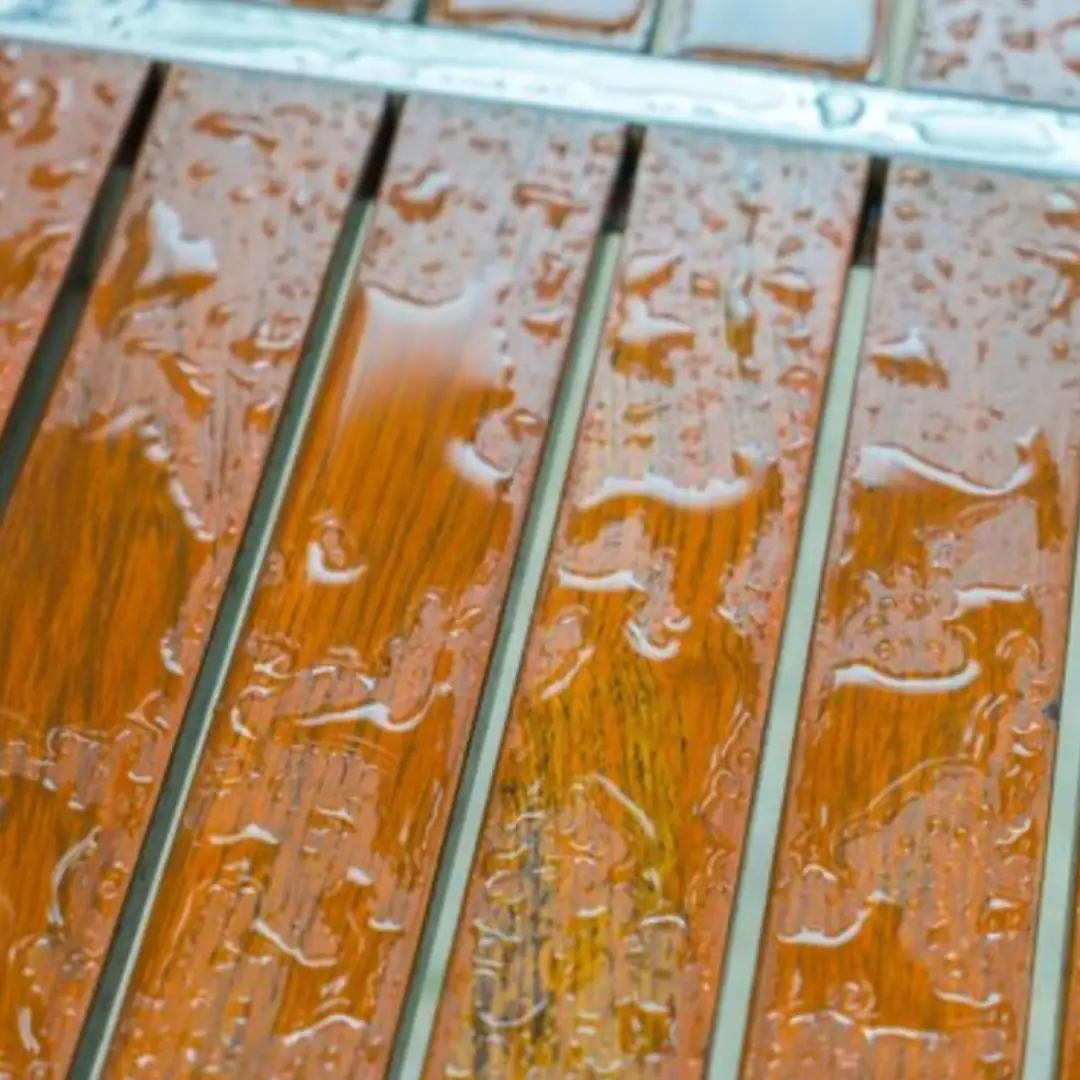
A Technical Yet Simple Explanation And Where Samrat HPL Clearly Differentiates
One of the most common questions asked by architects, contractors, and even homeowners is:
“Does Exterior HPL absorb water?”
Because HPL is made using kraft paper layers, many people assume it behaves like wood or plywood. This is one of the biggest misconceptions in façade materials.
At Samrat HPL, Exterior Compact HPL is engineered with 100% phenolic resin technology, making it a high density, moisture-resistant structural composite, not a water-absorbing material.
With over 9 million square metres of Exterior HPL installed globally till 2025, Samrat HPL façades are already performing in:
- Coastal climates
- High humidity zones
- Heavy rainfall regions
- Freeze–thaw environments
This real-world performance strongly validates its resistance to moisture.
First, Let’s Understand Water Absorption (In Simple Terms)
Water absorption means:
How much water a material can take inside its structure when exposed to moisture.
For comparison:
| Material | Typical Behaviour |
| Wood | Absorbs water, swells |
| MDF | Absorbs fast, deforms |
| Plywood | Can swell over time |
| Fibre cement | Absorbs moisture slowly |
| Exterior HPL | Extremely low absorption |
But why does Exterior HPL behave differently?
The answer lies in resin chemistry.
The Biggest Differentiator: 100% Phenolic Resin Core
- This is where Samrat HPL stands apart technically.
Samrat HPL Core Technology: - 100% phenolic resin impregnation
- High-pressure compact structure
Thermoset polymer matrixPhenolic resins:
- Are highly water-resistant
- Do not dissolve in moisture
- Do not soften under humidity
- Form a dense, sealed structure
What Happens in Low-Cost HPL?
- Many low-cost compact panels in the market use:
Urea-based resins
Or - Mixed phenolic + urea systems
Why?
Because urea resin is: - Cheaper
- Easier to process
- Faster curing
But technically:
| Property | Phenolic Resin | Urea Resin |
|---|---|---|
| Water resistance | Excellent | Poor–Moderate |
| Moisture stability | High | Low |
| Outdoor suitability | Ideal | Not recommended |
| Swelling risk | Very low | Higher |
| Long-term durability | Strong | Limited |
This is one of the most critical reasons Samrat HPL performs better in exterior conditions.
Scientific Explanation: Why Phenolic Resin Resists Water
- When phenolic resin cures under high pressure and temperature
- It becomes a thermoset polymer
- Forms a cross-linked molecular network
- Creates a non-porous internal structure
This structure: - Blocks water penetration
- Prevents swelling
- Maintains dimensional stability
Think of it as converting paper into a stone-like engineered composite.Actual Technical Numbers (For Clear Understanding)
Typical exterior-grade compact HPL performance: - Density: approx. 1350–1450 kg/m³
- Water absorption after immersion: typically < 6%
- Thickness swelling: extremely low
- Surface water penetration: negligible
Because Samrat HPL uses 100% phenolic resin, moisture stability is significantly improved compared to mixed-resin boards.
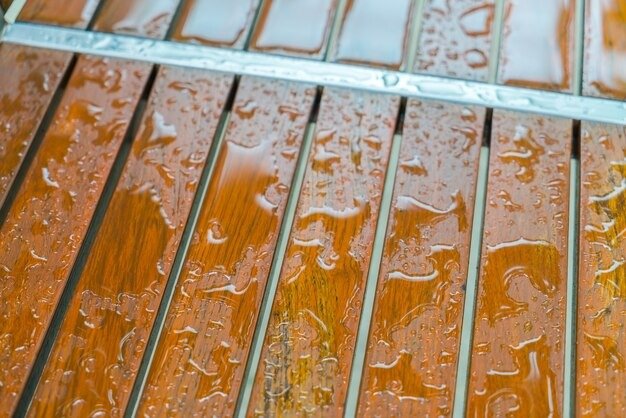
What Happens When Rain Hits Samrat HPL Scientifically:
- It does not easily penetrate inside
- Water stays on the surface
- The dense phenolic structure blocks absorption
This is why Samrat HPL performs reliably in:
- Continuous rain exposure
- Coastal humidity
- Wet–dry cycles
Related dimensional behaviour is explained in:
“How Exterior HPL Handles Thermal Expansion & Contraction”
Why Low Water Absorption Is Critical for Facades
If a panel absorbs moisture, over time it can lead to: - Swelling near edges
- Stress at fixing points
- Micro-cracks
- Delamination risks
This is why resin choice becomes critical.Samrat HPL’s phenolic-rich core ensures:
- Structural stability
- Long-term durabilityLow maintenance façade performance
Manufacturing Also Plays a Major Role
Samrat HPL panels are manufactured using:
- High pressure pressing
- High temperature curing
- Controlled resin saturation
This creates: - Dense compact panels
- Minimal internal voids
- Strong moisture resistance
Full process explained in:
“How Exterior HPL Cladding Is Manufactured: Step-by-Step Process”
Surface Protection Adds Another Layer
Samrat HPL Exterior panels include:
- EU-sourced decorative papers
- 50-micron Plexiglass (PMMA) protective layer
While this layer mainly protects against UV, it also supports: - Surface durability
- Resistance to environmental exposure
UV stability explained in:
“UV Resistance in Exterior HPL: Why Colors Don’t Fade”
Moisture Stability + Strength + Impact Resistance
In real conditions, façade panels face:
- Rain
- Humidity
- Impact
- Wind loads
- Temperature cycles
Samrat HPL’s dense phenolic structure supports performance across all of these.
Related performance topics: - “Flexural Strength of Exterior HPL”
- “Impact Resistance of Exterior HPL in High-Traffic Areas”
A Proven Global Track Record – Samrat HPL
Numbers speak louder than claims.
With over 9 million m² of Exterior HPL installed globally till 2025, Samrat HPL façades are already exposed to:
- Coastal humidity
- Heavy rainfall regions
- Cold European climates
- Desert environments
This real-world presence proves: - Moisture stability
- Structural durability
- Long lifecycle performance
Why Architects Technically Prefer Samrat HPL
Samrat HPL differentiates because:
- 100% phenolic resin core
- Higher density structure
- Better moisture resistance than mixed-resin panels
- Stable performance in exterior conditions
- Proven global installations
This makes it a true exterior-grade compact laminate, not just a standard board used outdoors.
Conclusion
- Water absorption is one of the most misunderstood aspects of Exterior HPL.
Technically and scientifically:
Phenolic resin blocks moisture penetration - Dense compact structure prevents swelling
- Urea-based low-cost panels perform weaker outdoors
- Samrat HPL’s 100% phenolic system offers stronger stability
With: - Density ~1400 kg/m³
- Very low water absorption
- High-pressure compact manufacturing
and backed by 9 million square metres of global installations till 2025
Samrat HPL Exterior Cladding delivers reliable performance even in rain, humidity, and extreme climates.