


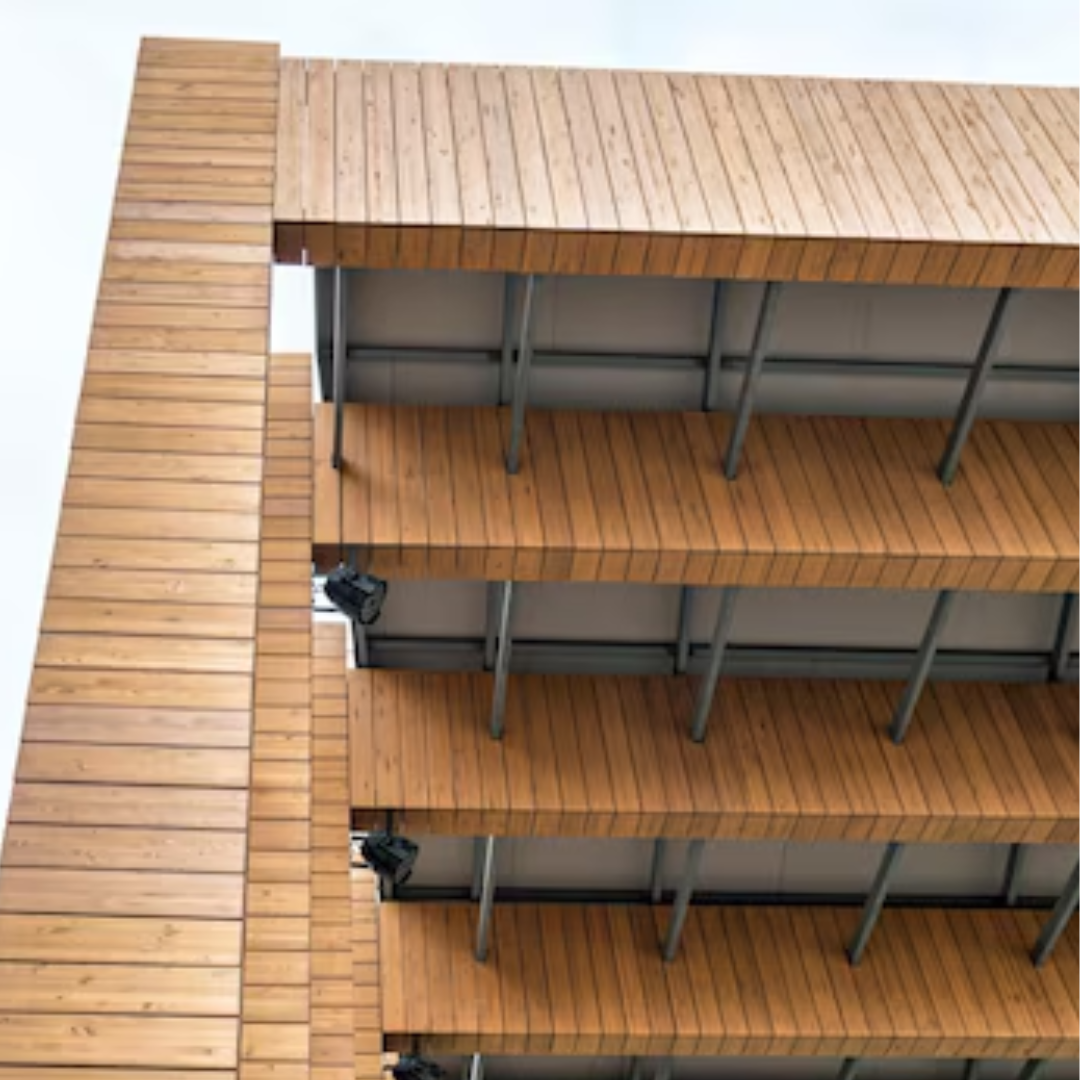
Understanding How Exterior HPL Facades Resist Wind Pressure – The Samrat HPL Engineering Perspective
One of the most critical structural factors in façade engineering is wind load. Every exterior cladding system installed on a building must be capable of resisting forces generated by wind pressure and suction.
In modern architecture, buildings are becoming taller, façade panels are becoming larger, and design aesthetics demand slimmer support systems. As a result, the structural performance of façade panels under wind load has become a major engineering consideration.
At Samrat HPL, Exterior Compact HPL panels are engineered to provide reliable performance under wind stress while maintaining dimensional stability and structural safety.
With over 9 million square metres of Exterior HPL installed globally till 2025, Samrat HPL façade systems are already performing in high-rise buildings and wind-exposed environments across Europe, the Middle East, and other regions.
What Is Wind Load in Facade Engineering?
Wind load refers to the force exerted by moving air on the surface of a building.
When wind hits a façade, two primary forces act on the panel:
Positive Pressure
Wind pushes against the façade surface.
Negative Pressure (Wind Suction)
Wind flows around the building and creates suction that pulls panels outward.
Both forces must be safely resisted by the façade system.
Wind loads are typically expressed in:
kN/m² (kilonewtons per square metre)or
Pa (Pascals)
For high-rise buildings, wind loads can reach:
1.0 – 3.0 kN/m² or higher depending on building height and location.
Why Wind Load Performance Matters for Exterior Cladding
If façade panels are not designed for wind loads, several problems may occur:
- Panel bending or deformation
- Stress on fixing systems
- Noise and vibration during storms
- Structural failure in extreme conditions
Therefore, façade materials must combine strength, rigidity, and proper installation design.
How Exterior HPL Handles Wind Loads
Exterior Compact HPL panels perform well under wind stress due to several structural properties.
1. High Flexural Strength
Flexural strength measures how well a panel resists bending when subjected to external forces.
High-quality Exterior HPL typically exhibits:
Flexural strength: ~80–120 MPa
This allows panels to:
- Resist bending between fixing points
- Maintain flatness under wind pressure
- Support large-format façade designs
➡️ Related blog:
“Flexural Strength of Exterior HPL: Why It Matters for Facades.”
2. High Density Structure
Exterior Compact HPL panels typically have densities of:
1350 – 1450 kg/m³
Higher density provides:
- Greater structural rigidity
- Better load distribution
- Improved resistance to deformation
At Samrat HPL, high density is achieved through:
- Deep resin impregnation
- High-pressure compact manufacturing
- Optimized resin content (~28.5%)
➡️ Related blog:
“Density of Exterior HPL: Why It Matters for Strength & Durability.”
3. Strong Internal Bonding
The internal structure of the panel must remain stable under wind-induced stress cycles.
Samrat HPL panels are manufactured using:
- 100% phenolic resin systems
- Higher resin loading (~28.5%)
- Deep resin impregnation of kraft layers
Phenolic resin forms cross-linked polymer networks that provide:
- High bond strength
- Excellent structural cohesion
- Resistance to delamination
➡️ Related blog:
“Why Exterior HPL Does Not Delaminate Over Time.”
4. Impact Resistance Under Windborne Debris
In strong wind conditions, panels may also experience impacts from airborne debris.
High-density compact HPL panels provide:
- Good impact resistance
- Surface durability
- Reduced cracking risk
➡️ Related reading:
“Impact Resistance of Exterior HPL in High-Traffic Areas.”
5. Dimensional Stability Under Wind Stress
Wind loads often occur together with:
- Temperature fluctuations
- Moisture changes
Exterior HPL panels maintain dimensional stability because they have:
- Low water absorption
- Stable phenolic resin structure
- Balanced panel construction
➡️ Related explanation:
“How Exterior HPL Handles Thermal Expansion & Contraction.”
Role of Ventilated Facade Systems
Exterior HPL panels are typically installed as part of a ventilated façade system.
This system includes:
- Structural subframe (usually aluminium)
- Mechanical fixing points (rivets or screws)
- Air cavity between cladding and building wall
This design helps distribute wind loads across the façade structure rather than concentrating stress on individual panels.
Panel Size & Fixing Layout
Wind load performance also depends on:
- Panel dimensions
- Fixing spacing
- Substructure design
Proper façade engineering ensures that:
- Wind pressure is evenly distributed
- Panels remain stable under load
- Fixings remain within safe stress limits
Laboratory Testing of Wind Performance
Façade systems are often evaluated using:
- Static wind pressure tests
- Dynamic wind simulation tests
- Structural deflection measurements
These tests simulate real wind conditions and confirm that façade panels can withstand expected loads.
Real-World Performance – Samrat HPL
Wind performance is best validated through real installations.
With over 9 million m² of Exterior HPL installed globally till 2025, Samrat HPL façade panels are already exposed to:
- High-rise wind environments
- Coastal wind zones
- Storm-prone regions
This global installation base demonstrates long-term structural reliability under wind stress.
Why Architects Trust Samrat HPL for Wind Performance
Samrat HPL panels offer strong wind load resistance due to:
- High flexural strength (~80–120 MPa)
- High density (~1350–1450 kg/m³)
- Higher resin content (~28.5%)
- 100% phenolic resin structure
- Dedicated exterior HPL production
These factors together provide a stable and reliable façade material suitable for modern architectural designs.
Conclusion
Wind loads are one of the most important structural challenges for façade systems.
Exterior Compact HPL panels resist wind pressure through:
- High flexural strength
- Dense compact structure
- Strong internal bonding
- Dimensional stability
Through advanced manufacturing and material engineering, Samrat HPL Exterior Cladding delivers dependable wind load performance for modern ventilated façade systems.
Backed by 9 million square metres of global installations till 2025, Samrat HPL continues to provide architects and engineers with structurally reliable façade solutions worldwide.