


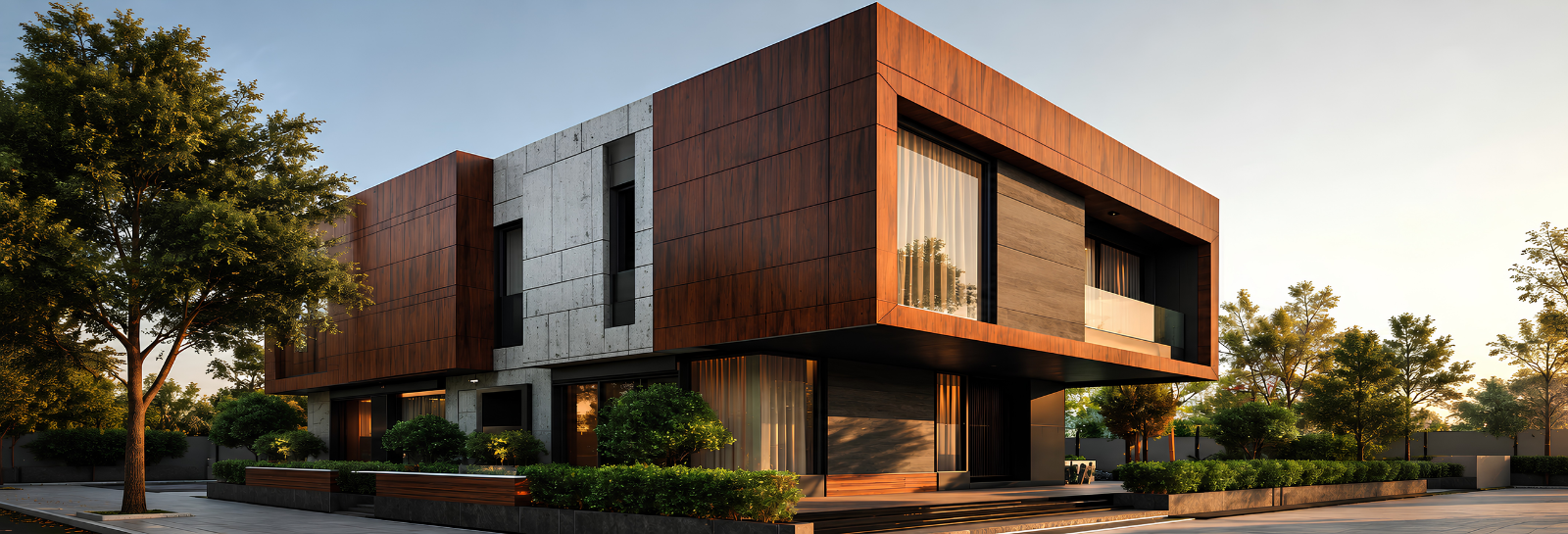
How Long Does Exterior HPL Cladding Last?
A Practical, Technical & Real-World Guide to HPL Lifespan vs ACP & Fibre Cement
When choosing a façade material, one question always comes up—sometimes directly, sometimes indirectly:
“How long does HPL cladding last?”
“Will this still look good after 10–15 years?”
And in today’s world, people also search:
- HPL cladding lifespan
- exterior HPL durability
- HPL vs ACP lifespan
- which facade material lasts longest
Let’s answer this honestly, technically, and in a way that actually helps you decide.
The Short Answer (What Everyone Wants to Know)
Exterior HPL cladding typically lasts 20–30+ years when properly installed.
But that’s not the real story.
Because the better question is:
 Why does HPL last longer than ACP and fibre cement?
The Real Comparison: HPL vs ACP vs Fibre Cement
Let’s not avoid it—this is exactly what people search:
HPL vs ACP lifespan
HPL vs fibre cement durability
|
Factor |
HPL Cladding |
ACP Panels |
Fibre Cement |
|
Lifespan |
20–30+ years |
10–15 years |
12–20 years |
|
UV Resistance |
Excellent |
Moderate |
Moderate |
|
Cracking Risk |
Very low |
Low |
High |
|
Moisture Behaviour |
Stable |
Core sensitive |
Absorptive |
|
Aesthetic Life |
Long-lasting |
Fades |
Ages unevenly |
HPL doesn’t just last longer — it ages better.
Why HPL Lasts Longer (Let’s Break It Down Simply)
1. It’s Not Just a Panel — It’s Engineered
Exterior HPL is made under:
- High pressure
- High temperature
- Using phenolic resins
This creates:
A thermoset structure — meaning it doesn’t soften, warp, or break down easily.
Compare That:
- ACP → Thermoplastic core → reacts to heat
- Fibre Cement → Rigid but brittle → cracks over time
HPL is the balance: strong + stable + forgiving
2. Density = Strength = Lifespan
Typical HPL density:
1350–1450 kg/m³
What this gives you:
- Better impact resistance
- Lower water absorption
- Shape stability over time
This is a big reason why exterior HPL durability is higher
 Want to understand this deeper?
Density of Exterior HPL: Why It Matters for Strength, Impact Resistance & Durability
3. UV Resistance (Where Most Materials Lose the Battle)
Let’s be honest — most façades don’t fail structurally.
They fail visually.
People search:
Does HPL fade in sunlight?
How HPL Handles UV
At Samrat:
- PMMA (Plexiglas®) protective layer (~50 microns)
- Carefully selected pigment systems
- 3000-hour Xenon arc testing
This is not marketing — this is simulated long-term weather exposure
Explore more:
- How Acrylic / PMMA Layers Improve Exterior HPL Performance
- UV Resistance in Exterior HPL: Why Colors Don’t Fade
Compare That:
- ACP → Coating fades over time
- Fibre Cement → Surface chalks, loses finish
HPL is designed to resist ageing, not just survive it
Let’s Address the Real Fears (High Search Questions)
 “Does HPL fade over time?”
 Slight, uniform ageing
 No patchy fading
Because of controlled pigments + protection layer
Read more:
Organic vs Inorganic Pigments in Exterior HPL Colors
“Does HPL crack?”
Only if installed incorrectly
Top reasons:
- No expansion gap
- Rigid fixing
Must read:
HPL Facade Installation Mistakes: Why Panels Fail & How to Avoid Them
“Does HPL delaminate?”
No — if manufactured correctly
Thanks to:
- High-pressure bonding
- Phenolic resin system
Read:
Why Exterior HPL Does Not Delaminate Over Time
The Hidden Truth (Most People Miss This)
Lifespan is not just about the material — it’s about installation
Even the best panel can fail if:
- Expansion gaps are ignored
- Fixing is rigid
- Ventilation is poor
This is why people search:
- why HPL panels fail
- HPL facade problems
Important read:
How to Install Exterior HPL Cladding + Common Installation Mistakes
Weather Resistance: Real-World Performance
Exterior HPL performs in:
- High UV climates (Middle East)
- Freeze-thaw cycles (Europe)
- Coastal environments
Compared to ACP & Fibre Cement:
|
Condition |
HPL |
ACP |
Fibre Cement |
|
UV |
Excellent |
Moderate |
Medium |
|
Moisture |
Stable |
Risk if damaged |
Absorbs |
|
Temperature |
Stable |
Expands |
Cracks |
HPL is built for real climates — not ideal conditionss
The Samrat Difference: 100% Focused Approach
Here’s something important:
Most companies treat HPL as one of many products. Samrat is 100% focused on Exterior HPL.
What That Changes
- Better control over resin systems
- Careful selection of decor papers & pigments
- Consistent production quality
- Deeper façade performance understanding
What That Means for You
- Better durability
- Better colour stability
- Better long-term performance
Real-World Proof
9 million m² installed globally till 2025
Across:
- Europe
- Middle East
- Challenging climates
This is not theoretical — it’s tested in reality
So… Which Facade Material Lasts the Longest?
Let’s answer what people actually search:
Which facade material lasts longest?
- ACP → cost-driven
- Fibre cement → functional
- HPL → performance-driven
If your priority is lifespan, stability, and long-term aesthetics — HPL is one of the best facade materials available today.
Frequently Asked Questions
How long does HPL cladding last?
Exterior HPL cladding typically lasts 20–30+ years with proper installation.
Is HPL better than ACP?
Yes, HPL offers better durability, UV resistance, and lifespan.
Is HPL better than fibre cement?
Yes, HPL is more stable, durable, and less prone to cracking.
Does HPL fade in sunlight?
High-quality HPL shows minimal fading due to UV protection layers.
Does HPL crack over time?
Only if installed incorrectly (no expansion gap or rigid fixing).
What affects HPL lifespan?
- Installation quality
- Material engineering
- Environmental exposure
 Want to Go Deeper?
If you really want to understand HPL performance, these are worth your time:
- Density of Exterior HPL: Why It Matters for Strength & Durability
- How Acrylic / PMMA Layers Improve Exterior HPL Performance
- Organic vs Inorganic Pigments in Exterior HPL Colors
- Why Exterior HPL Does Not Delaminate Over Time
- How to Install Exterior HPL Cladding + Common Installation Mistakes
Conclusion
Samrat Exterior Compact HPL—built with a 100% focused approach, engineered for real climates, and proven across 9 million m² globally—delivers façade solutions designed to last, perform, and retain their beauty for decades.